Showing posts with label Dungeons and Dragons. Show all posts

Tuesday, December 17, 2013

D&D Next Custom Content: Legionnaire Fighter Subclass

So far, my experience with D&D Next has been overwhelmingly positive. Over the playtest's run, the vast majority of concerns I've had have been addressed, and i look forward to the final product.

That being said, the one big question that remains unadressed by the playtest documentation is the system's capacity for custom made content. The official D&D blogs have said that they perceive an unfortunate trend in 3e+ of DMs not creating as much custom content as was the norm for OD&D-2e, and plan on emphasizing at-least the creation of custom sub-classes within the DMG. This bodes well, and I can only hope for detailed guidelines for the creation of enemies, sub-classes, spells, etc. in the DMG, but there's always the niggling doubt that they'd prefer to sell you fish than to teach DMs how to do it themselves. I'll make my own content either way, but I'd prefer some clear guidelines for the community that both make it easier for everyone and help make custom content more portable between groups.

As an experiment, I tried my hand at putting together a Roman Legionnaire sub-class for the Fighter. It seemed appropriate as, in addition to the fact that many settings use Rome as a reference point, this would model professional soldiers (IE: NPCs) better than the adventurer focused ones in the playtest. Evank Elkins over at In Places Deep is also running a game at the moment which it could be useful for.

Overall, I found this a surprisingly easy task, completed within an hour's work. I simply identified the levels at which fighter gain sub-class abilities, stole abilities from other sub-classes (largely the Bard sub-class that focuses on being a military leader and the Ranger one that focuses-oddly enough, on 1v1 combat), and modified these abilities where necessary to emphasize supporting allies rather than fighting alone. In general, the strategy was that this character would be less powerful than a fighter of the same level designed for 1v1 combat, but outclass that same character if there were 2 of the same builds on either side of the fight. Explanations of such adjustments may be found below the actual rules.

However, if I'd wanted to do something that didn't have such obvious parallels throughout the playtest document, I may have had more trouble. I'll have to try again with something a bit more off the wall later.

Path of the Legionnaire 

Legionnaire Features
Level: Feature
  3: Additional Fighting Style (Protection)
  7: Discipline
10: Focused Attack
15: Testudo
19: Rally

Additional Fighting Style (Protection)
At 3rd level, you gain the Protection fighting style. If you already have it, take another of your choice instead.

Discipline
Starting at 7th level, you have advantage on saving throws against being frightened/intimidated/or otherwise forced to retreat from battle. If you have proficiency with Charisma saves, the effects extended to allies within 5 feet of you.

Focused Attack
By 10th level, when you hit a creature with a weapon attack, you cause the target disadvantage against the next weapon attack against it by any character other than yourself until the end of the target's next turn.

Testudo
Beginning at 15th level, when you must make a dexterity saving throw to take only half damage from an effect, you may substitute a strength save instead. If you succeed on the saving throw, you instead take no damage and only half damage if you fail. You must be wielding a shield.

Rally the Troops
At 19th level, you may, as an action & once per long rest, rally allies. When you do so, any creatures of your choice that can hear you regain 6d8+20 hit points. This also ends the charmed, frightened, paralyzed, and stunned conditions on its targets. Each target can also use its reaction to stand up or move up to its speed. This ability has no effect upon targets immune to mind effecting abilities.

Logic

Additional Fighting Style (Protection)
Additional Fighting Styles have already been established as acceptable via the Path of the Warrior subclass. Protection simulates a shield wall effectively enough that I see no reason to create a new rule. It is placed first because it is is the single most essential element of a legionnaire's training, which every member of the unit needs for their tactics to function. If this is considered more powerful that its placement at Lv10 in the PAth of the Warrior, I believe that to be mitigated by the fact that the player isn't allowed their choice of style.

Discipline
Mostly borrowing the Lv7 ability of the Colossus Slayer Ranger here, because discipline is a major advantage of the legions. The modification is because I find Steel Will to be flawed, as anyone who attains a proficiency in Charisma saves (I personally treat Wisdom primarily as perception, but that's another discussion. Suffice to say, if you would use Wisdom for fear, then the ability is made useless by the fact that Rangers are proficient in Wisdom already.) completely negates the feature. This simple change both keeps the ability useful, makes sense (the bravery of the more experienced soldiers is inspiring), and emphasizes the organized nature of this subclass.

Focused Attack
Essentially the Ranger's lv11 Staggering Attack, but designed to grant allies the advantage rather than yourself. Again, this is to emphasize the group element. When alone, it's useless to you, but this should be balanced out by the fact that, if two people with this ability are adjacent to one another, they not only grant it to one another but any others that may attack the enemy. IE: The front line can loosen up the enemy with gladii while the rear ranks takes advantage with reach and ranged weapons. I debated weather to simply use the Bard's Coordinate Allies for this, as it, at first, seems more powerful - being able to grant advantage to any ally you see on any enemy you see hit within a sizable range, but the ability to grant it to multiple attackers more than makes up for this lack of range and keeps the legionnaire as a front-line support fighter where he belongs.

Testudo
 This is, again, is the Colossus Slayer ability for this level, but it serves as an accurate simulation of their defenses against ranged attacks. It also provides a fun, martial variant on the classic Uncanny Dodge that can reflect that classic image of a warrior crouching behind his shield to deflect Dragon's fire or absorb a hail of arrows. Requiring a shield is a thematic necessity, and the addition of the Strength substitution feature is meant to balance this.

Rally the Troops
As the Bard's Rally, but with the removal of the "as Mass Cure Wounds" aspect, as its extremely unlikely that a Lv19 Fighter can cast magic.  Instead, I treat it as the 7th lv+ version of MCW, due to the player's high level, while removing its 50ft range/25ft radius in exchange for a more thematic and simple audible range. Changed "undead and constructs" to mind affecting abilities due to flavor and edge cases, but they should almost always be identical.

Outside of the standard balance considerations, this seems fine to me, my only concern with this relates to Roman equipment, i.e., tower shields, pila, and gladii? In D&DN terms a gladii is a shortsword, which most "sword & board" fighters have no real use for. I suppose I could add a sidebar that lists the gladius as a new weapon (just a 1h piercing sword without the finesse & light of a shortsword or the versatility of a longsword - trading these special features for raw damage) but that seems like overstepping the bounds of this exercise. Still, they did move towards longer blades as history went on anyway, so it may not be a big deal in the first place.

Saturday, January 28, 2012

RPG Races

So, most RPGs feature "races." The term is an artifact, has unfortunate connotations, and we should have universally switched to "species" a long time ago - but I digress.

I'm not racist! I havean Elven friend.
Problem
In every single RPG I've played, that has the feature, from D&D to WoW, you have some races that are simply better choices for a given class than others. Go look on the official D&D forums for 3e, 3.5e, or 4e and you'll see the same thing. "X's Fighter/Cleric/Etc. Guide," a ridiculously well researched break down of every possible choice for building a character. One of the first issues is always race, of which there is usually a list of only 2 or 3 ideal choices. 

For example, a Dwarf makes a good fighter, and a crappy wizard - in everything.

In 4e D&D, Dwarves are resistant to poison, can heal themselves more quickly than others, are resistant to being moved, tougher and wiser, but have slightly slow movement. Writing off poison resistance, both of those other special features help them effectively stand between angry things and other characters.

In WoW, they get "Gun Specialization" and "Mace Specialization," which increasing damage with those weapons; "Frost Resistance" and "Stoneform," damage mitigating abilities; and "Explorer" which provides more loot from archaeological sites. A whopping 4/5 of those are combat based, 3/5 specifically fitting into the "tank" role, and the other one is class agnostic. This, in combination with a very high Strength & Stamina, but low Agility, make them obviously superior as martial combatants.

For the proof of this, a census of WoW shows usthat 24% of Dwarves are Hunters, 22% are Paladins, 21% are Shamans (similar to Paladins, still prone to melee combat), 11% are Warriors, 8% are Priests, 6% are Death Knights, 4% are rogues, and Mages and Warlocks make up only 2% each of the population. Out of 3,058,888 distance characters, only 3009, one in every 1000 are Dwarven Mages.

Skin color, size, hell - you don't even have to have a beard - but you damn well better be a warrior.
From both a game design & business perspective, having a feature (Dwarven Mage) that only 1 in 1000 players will use is bad news. It's simply a waste of resources.

From a roleplay perspective, it sucks that the rules serve as a disincentive against a particular character build, effectively punishing players for wanting to go against the grain. Though this is possible, the peer pressure of allies knowing you could be performing your role more effectively and the persistent idea that you are objectively playing the game "wrong" are hard to fight, as numbers show.

Why is this such a global problem? Well, the popular conception of Dwarves comes directly from J.R.R. Tolkien's works - wherein every featured Dwarven character, to the man, is a warrior.

My axe, his axe, it doesn't really matter.
A google image search provides empirical evidence of it. Every dwarf on the first page is a warrior. It's not until page 2 that we start seeing Disney's Dwarves, but other than a few of those throughout, its still warriors. After that, we get pictures of them as smiths, then merchants, then engineers. It isn't until page 8 that (at the moment) we see the first non-warrior Dwarf, a female druid.

The "white goat" of her family.
It is a problem because:
A) RPGs are built upon character options. This has come to define the genre as much as the concept of Role Play (see: computer RPGs existing). Effectively limiting these options unnecessarily makes your RPG worse at this cornerstone of the game.
B) If you DO offer the option, despite it being an objectively poor choice, you are creating content that will be rarely used and thus wasting resources.

Solution

What we need to do is ensure that each race can play each role equally well. How? Provide specific "racial features" per race/class combination. As a general example, here are some spitballed things Dwarves are traditionally good at that fit within the fortes of the basic D&D classes:

-Cleric: Incredible composure and strength of faith [read: resistance to evil compulsion] (Tolkien's are notoriously stubborn and traditional). Better with defensive buff spells. If you get to choose between gods, and there are Dwarven/Non-Dwarven choices, some bonus for choosing their own gods. Very subjective to setting - due to particular gods.
-Rogue: Better with mechanical devices (craftsmen, engineers, and architects), especially stonework. Perhaps slightly improved night-vision (living underground) - nothing that would make the rogues seem like a different biological organism - just a case of specialized training to enhance their natural strengths.
-Warrior: Better with axes & hammers, heavy armor and shields (they tend to be heavy, armored guys rather than light, agile, harriers or cavalrymen). Perhaps good at standing their ground.
-Wizard: Runic magic.( They're good at spells that function by marking a spot/item.) Enchanting items.

In addition, each race should have at least one universal trait, be it ability scores, poison resistance, or what have you, to make sure that there is a sense that these characters do have essential elements in common. If ability scores are used, it is important that these are not more important than choice between Race/Class combo traits, lest the whole exercise be pointless.

Let's look at WoW's dwarf again. We could keep the exploring skill as a universal feature, but only gun skill for hunters, the hammer skill for warriors & paladins, the frost resistance for mages & warlocks, and the stone form for shaman and druids. That less than ideal, because the features still lean towards melee combat, but it gives you a good and unique reason to choose such combinations.

The result of this is better both for the game and for the setting's flavour. It's not that all Dwarves are warrior craftsmen of stout faith, but that Dwarven warriors tend to be this, their cult is known for its stout unwaveringness, their merchants tend to deal in mechanism and metalcrafts, and their wizards share ancient secrets of enhancing magic via the written word. It gives the species dimensions, rather than having each member basically be "like Gimli, but -"

Friday, January 27, 2012

D&D 5e & Happy Coincidences


So, as anyone who's into D&D probably knows by now, there's a new edition in the works. The key concept? Scaling complexity.


Oddly enough, I'd had a little inspiration a few months ago and had hit upon the same idea. I never went anywhere with it because, upon showing it to my primary collaborator, it received a resounding meh.

Still, figured I'd post what I'd had here for the sake of it. That IS supposed to be the idea of this blog after all.
THE GAME- Concept: A rule system designed to be incredibly simple and intuitive (playable from memory) while allowing for as much depth as the players want.- Features: Requires only a d6 Requires no other accessories, even a character sheet (though writing things down is... good) Can be played purely from memory (gotta avoid feats/perks because of this. not sure if this will ENTIRELY remain the case for DMs, as referencing tables and such is useful, but certainly for players. At minimum I’d like to leave the door open to DMs playing from memory. E.G. you can look up the stats on a skeleton, but it’s completely possible to spit ball them off the top of your head as well.) Scalable complexityA player can choose to define skills and shop for the perfect combination of arms/armor, or can simply roll 1d6 for their 6 basic stats and assume that each hand = 1d6 damage. The two approaches are compatible with one another, side by side, within the same game, with no effective balance difference beyond the greater degree of tactical options available to the more in-depth player. Classless Setting Independent (with some notes here and there for my own use that DO tie into mine)
Resolution Mechanic: Statistic+1d6 vs Static value or opposed Stat+1d6 roll.
Example A: Jack wants to walk a balance beam. His Agility statistic is 4. His host decides that this is an average difficulty task, and informs him that he will need a result of at least 7 to succeed. Jack rolls a 3, and crosses successfully, as 4+3>=7.
Example B: Jack & Jill are engaging in an arm wrestling competition. Jack’s Strength statistic is 3, while Jill’s is 5. Jack rolls a 2, while Jill rolls a 1. Jill wins, as 5+1>3+2. On a tie, they would have had to re-roll. In combat, however, ties are given to the attacker.
-  To Do:
Determine HP derivation
Install Magic system
Add armor
Add more complete weapons listing, perhaps re-organizing things
Add enemies & enemy generation rules
Add misc goods listing
Determine starting Gold/item value
-  To Do:
-Current Working Problems:
The reliance on a single, small die means that static modifiers count for a lot. IE: It’s always possible for someone with the worst possible attack stat to hit someone with the best possible defense stat (1d6+1[=7] vs 1d6+6[=7], but only BEFORE situational modifiers are applied. This in itself I’m not all-together too concerned about, however I AM concerned as to weather or not the weapon damage system I have in place is negatively effected by this.
As it stands, the base damage of a weapon is 1d6, then it takes penalties as it gains more features, trading versatility for raw power. E.G. A longsword deals an average of 2.5 dmg one-handed vs a broadsword’s 3.5, and 6 dmg two-handed vs a barbarian(2-handed) sword’s 7, but the user can switch between the two options at-will.
I’m concerned as to weather this overly penalizes the more versatile weapons. A spear, for example, has the double, reach, and thrown qualities. Ideally, this would make the spear a very popular choice. I’ll simply have to playtest things a bit once I have HP worked out.
It may not be a problem at all, especially in light of the “minimum 1-damage on a successful attack” stipulation, but it is a concern.
So far, I have mitigated the problem by not penalizing weapons with multiple damage options at all. A proper sword is just better than a sickle sword. There’s a reason that Halberds grew so popular. This is a calculated choice however, as in the setting I’ve been using these weapons are balanced by their lack of availability to the players, requiring a special trip to their place of origin for acquisition - thus creating natural adventure hooks in-system.

CHARACTER CREATION

Step 1: STATISTICS

All players must, minimally, derive the six essential statistics of their characters. All characters have an identical list of statistics ranging from 1 to 5, with 3 being average, 1 extremely poor, and 5 exceptionally gifted.
Agility A character’s balance & mobility, affecting their ability to move quickly and quietly.
Dexterity A character’s fine motor skills, affecting their ability to manipulate with their hands.
Intelligence A character’s mental acuity.
Perception A character’s awareness and analysis of their surroundings.
Strength A character’s raw physical might.
Willpower A character’s resolve and influence, social and sorcerous, upon the world around them.
Players divide 18 points amongst their 6 statistics.

Step 2: SKILLS (Optional)

If a player wishes, they may choose to define their character’s abilities in greater detail. Skills are specific areas of expertise or weakness for a character. They represent special cases in which a number other than the normal governing statistic should be used to determine a character’s chance of success. Though a character’s Agility may be 3, for example, they may be especially stealthy(4) but have poor balance (2).
Like the essential statistics, skills range from 1 to 5. By default, it is assumed that all skills governed by a given statistic are equal to that statistic’s value. A player may choose to increase the value of a single skill by lowering that of another. The two skills need not be governed by the same attribute.
The following is a non-exhaustive list of suggested skills to use in your games.
Agility Acrobatics, Balance, Stealth
Dexterity Axes, Blades, Bludgeons, Marksmanship, Polearms, Shields,
Intelligence Alchemy, Bushcraft,
Perception Empathy, Hearing, Sight
Strength Athletics, Endurance
Willpower Charm, Deception, Intimidation, Sorcery

Step 3: FAULTS (Optional)

For dramatic purposes, a player may choose particular character faults or physical problems a character may have. These are not simply areas in which the character is untalented or uneducated, i.e. low skills, but essential obstacles to the character achieving their goals. A holy man of a benevolent deity, for example, will find gently persuading information from a captive far more difficult than beating it from him. Likewise, a knight with a crippling phobia of horses may find himself unable to properly aid his allies in a cavalry battle.
When a character fault becomes relevant, the player, and their allies in turn, will suffer for it. A character committed to absolute honesty may, for example, come right out and confess their plans to the team’s adversary, or an acrophobic character may automatically fail a skill check to cross a tightrope. As the character is choosing to fail for the sake of drama, however, they should be rewarded with the ability to dramatically circumvent the game’s mechanics for their benefit as well.
Any time a player suffers a significant setback (complication of or failure to overcome an obstacle) due to their character’s faults, that player is rewarded with a free re-roll of any die roll of their choice in the future. Players may, and are advised to, hold on to these rolls for use in dramatic moments when, though statistics may not be on their side, it would be narratively interesting, i.e. cool for their character to perform an otherwise risky maneuver.
This system should not be seen as a way of improving a character, however, but simply making characters and games more interesting. If the host notices a definite trend towards players using faults as a means of ensuring success, the host is likely either treating the faults themselves too lightly or giving out free re-rolls too cheaply. That being said, there’s nothing wrong with playing the Hunchback of Notre Dame and working your faults for all their dramatic worth.

Step 4: EQUIPMENT

All players begin with a full set of clothing, provisions as appropriate for their travels, and X copper coins.
If a player wishes, they may choose to detail their character’s equipment by spending some those coins before the game begins (see the Equipment chapter).
Advancement
Techniques (Learned from others, intentionally or not)
Spells

EQUIPMENT

ARMOR
Armor is classified only by it’s material.
Sorcerers will find that they can not cast magic while touching metal, making most armor impractical.
WEAPON DAMAGE TAGS
Barbarian AxeB 2d6 2h, Hack
Barbarian HammerB 2d6 2h, Bash
Barbarian SwordB 2d6 2h, Slash
Bow Draw, Ranged
Dagger 1d6-1 Small, Stab
Dagger, Throwing 1d6-2 Small, Stab, Thrown
Double SwordSt 1d6-1 2h, Double, Slash, Stab
Crossbow, LightT Load, Ranged
Crossbow, HeavyT Load(Full Turn), Ranged
Hand Spear 1d6 Stab
Sabre 1d6 Slash
KnifeSh 1d6-1 Slash, Small, Stab
Knife, ThrowingSh 1d6-2 Slash, Small, Stab, Thrown
LongswordSh 1d6-1 Bastard, Slash, Stab
Shield 1d6-1 Bash, Block
ShortswordSh 1d6 Slash, Stab
Spear 1d6-2 Double, Stab, Reach, Thrown
Staff 1d6-1 2h, Bash, Double
Unarmed 1d6-2 Bash, may incur damage yourself
Gauntlet - Modifies the material bonus of unarmed attacks.
Superscript indicates limited in-setting availability
WEAPON TAGS
2h Requires the use of both hands.
Bash Can deal bashing damage, ignoring half of a target’s armor.
Bastard Deals an additional die of damage when wielded with 2 hands.
Bifurcating A double weapon which may be split into a pair of 1h weapons and rejoined.
Block Can forgo this hand’s use next turn in order to reduce an incoming source of damage by 1d6.
Double Treat as either two 1h weapons or a single bastard weapon.
Draw Weapon must be readied before each shot.
Hack Can deal hacking damage, doubling the final damage.
Load Weapon must be reloaded after each shot.
Ranged Weapon can hit targets within line of sight.
Reach Has a melee range of 4 meters (only when wielded in both hands)
Small Can easily be concealed in the hand or on one’s person.
Slash Can deal slashing damage, causing recurring damage equal to that dealt (does not stack).
Stab Can deal stabbing damage, ignoring armor completely if actual damage is dealt.
Thrown Can be effectively used either in melee or thrown as a ranged weapon.
Materials
Unarmed/Armored 0
Leather/Stone/Wood 1
Copper 2 (Fairywood)
Bronze 3
Iron 4
Steel 5
Craftsmanship
A well or poorly made weapon or suit of armor may gain an additional +1/-1 modifier and/or benefit from special features, such as the bifurcating feature for double weapons.

HOSTING A GAME

Tests
7 = Normal difficulty
The rules as presented here assume a classical bronze age setting. To create a more traditional fantasy feel, simply apply the following changes:
-Consider steel to be a +0 material, with material bonuses deriving either from fantastic materials or magical enchantments.
-Ignore weapon availabilities based on location or technology, and feel free to add exotic weapons. A katana, for example, would be statistically identical to a longsword.

COMBAT

Turn = Move & One action w/ each hand
(ie 1 attack w/ a 2h weapon, 2 attacks w/ 2h weapons, or a block and attack)
Melee Damage = Weapon+STR (Min 1)
Double STR bonus when wielding 2 handed 
May simplify to simply blocking/dealing 1d6/hand for ultralight games.
Improvised Weapons: Treat as the closest equivalent weapon above, but consider the item’s materials and workmanship. A sledgehammer and a bar stool would, as 2 handed bludgeons, both effectively be barbarian hammers, but, as a tool, the sledgehammer will be more durable. Neither, of course, will last as long as a proper weapon and neither is likely, in a bronze age setting, to be made of bronze.
Resolution Mechanic: Statistic+1d6 vs Static value or opposed Stat+1d6 roll. Example A: Jack wants to walk a balance beam. His Agility statistic is 4. His host decides that this is an average difficulty task, and informs him that he will need a result of at least 7 to succeed. Jack rolls a 3, and crosses successfully, as 4+3>=7. Example B: Jack & Jill are engaging in an arm wrestling competition. Jack’s Strength statistic is 3, while Jill’s is 5. Jack rolls a 2, while Jill rolls a 1. Jill wins, as 5+1>3+2. On a tie, they would have had to re-roll. In combat, however, ties are given to the attacker.
edit: Wow, sorry for the ridiculous formatting error.

Monday, November 28, 2011

Why I Hate Levels

Remember our discussion of player investment strategies? Levels were a big part of that. They're a huge part of what makes the current crop of MMORPGs so popular. They are the proverbial carrot on the stick, and a huge part of the gaming lexicon. I'll certainly do a more thorough "Featured Feature" on them at some point.

The thing is, as a matter of personal taste, I kinda hate levels.
FUCK YOU!

The thing is, in many RPGs, levels do one thing: make you keep playing. Less often, however, do they make you have fun.

Let's look at 3 examples: an old video game, a new video game, and a tabletop game.

There was a joke here, but it was expired and I had to throw it out.

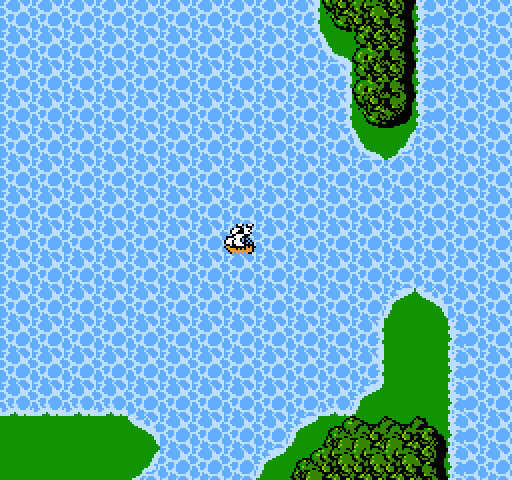
Raise your hand if you recognize this game by screenshot alone. Now, put your hand down unless you recognize that specific spot in that specific game. Everyone with their hand still up is missing a few hours of their lives that SquareEnix will never give them back.

You see, that bit of grass in the bottom right is what has become known as the "Peninsula of Power." It's a little bit of land that, due to a mistake on the part of the developers, generates random encounters that are intended to exist on the continent north of that thin strip of water separating the two.

The result of this ephemeral land-bridge incident is that players would spend hours walking around those few cells of grass in order to fight high level monsters and increase their levels more rapidly than normal. The sadness here is two-fold. Firstly, that such a practice is neccessarry to reasonably complete the game. Secondly, that the game expects you to do this without such a short-cut.

You see, back in the day grinding wasn't the groan-inducing buzz word it is today. It was the status quo. Today it's something to be reduced when possible. Back in the day it was expected to be in every RPG you played. The game went from levels A-Z, with major fights at each vowel, and it was up to you to ensure you were at the correct level when those came up. The designers knew how powerful they wanted the early and end game enemies to be, without much thought to the player's trip up the lv ladder. Pacing hadn't really occurred to anyone.

Lv57 Commenter

The above is a picture of a Troll from World of Warcraft - one of about 3 model varieties (regular, savage, and big brute guys). Now, I first fought an enemy with that model in, say, the high lv 20 range. That one's lv57. However, it's okay, because the player is lv67 and can easily whoop this one. However, I'm sure there's a lv67 Troll out there as well, though he'll be of a slightly different coloration.

The Law of Chromatic Superiority is an old trick used in video games to recycle a limited supply of enemies. At lv1 you fight a blue slime, at 10 a red one. The thing is, you're doing the same all the way up the ladder. Sure, the lv40 wolves are larger and black, and your sword glows now, but you're still doing the same thing you did for your tutorial quest. At some point, it's just the same process over and over - with something more EXTREME added with each iteration.

The levels are not actually representing progress at all. Just cycles.

Worse, is that, in the MMO market, every level until the cap is often a simple time-sink, as most new content is produced solely for those at the "end-game." They need to keep people paying, and thus need to produce content for those who've expended that in the original box. Except, most haven't, they've just rushed to the end because that's where the content is. So, for player and developer alike - that's a good bit of effort wasted and less fun and profit than should have been made all around.

In MMOs, my pet peeve with levels is that they are absolutely counter-intuitive to the whole Massively Multiplayer bit. Anyone who's tried to take a party of real life freinds into an MMORPG, and play through the game with them will know my pain. It doesn't work. Someone will feel like the others are holding them back, or like everyone is outpacing them. People will reserve a character for playing with the group, but then grow resentful as they feel like they're being forced to play what has quickly become their "alt" character. A lv30 player can not have fun with a lv4 player, period. It wastes everyone's time. In a genre built entirely around social interaction, in which the player base is its entire defining feature, the only thing more egregious than this design mistake is its prevalence. Cudos to EVE Online, Guild Wars, and, to a lesser extent, City of Heroes for at-least reducing this issue.

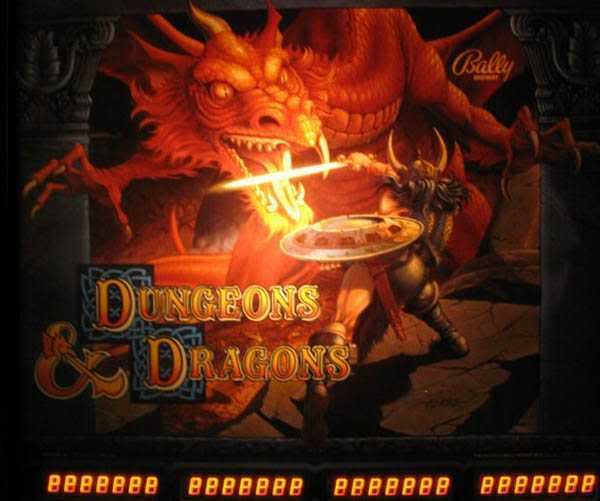
A D&D pinball machine that doesn't list your score in "Experience Points" has poorly utilized its source material.

And finally we have Dungeons & Dragons, which we must always return to whenever we discuss RPGs because, frankly, it's always to blame. It codified the trope. Those games were directly influenced by this game and, unfortunately in some cases (see: the later retconned Vancian magic system of FF1), its rules. Levels are always part of the package.

Even D&D's designers have, to some degree, noted some problems with levels. You see, fans have always identified a "sweet spot" for D&D. There's a certain level range where you've been given enough options to build a unique character, things are challenging but not imminently fatal, and you're facing off against some of the game's more iconic and fun enemies. Life, as an adventurer, is good. The low levels were a meat grinder, but you survived and its made you appreciate your status. Higher up, however, and things start getting silly. Nothing can face you any more. You've collected so many various baubles and powerful abilities than two are bound to interact in some unplanned way and, suddenly, you can transmute dragons to gold pieces as a free action twice per round. God grow angry with you, then go sulk in a corner lest they incur your wrath. You are literally creating life and new planes of reality in some rule sets. Meanwhile, you're DM is crying himself to sleep at night as he wrestles with how to make the game fun again without being a total dick.

So, with 4th edition, the designers explicitly stated that they'd made a conscious effort to take what they felt was the sweet spot and spread it over a wider level range. However, they never actually said that the whole game was now in the sweet spot. The same old problems exist, only somewhat diminished.

The sad thing is, the designers have designed themselves into a corner. Look at a D&D bestiary, and you'll find several monsters with "Dire" versions, Dragons with over 5 developmental stages, and, in 4th edition especially, creatures that plainly just have different versions at different levels for no reason other than allowing them to be used more often. The published adventures must be labeled for their appropriate levels, thus reducing their wide-appeal and the resources the adventure writers have to work with.

In all 3 cases, the level system isn't really working for players or designers.

In closing, I'll briefly explain my preference: Don't level up, level out. The issue in all the above cases is that it is assumed that once a milestone is reached a character must become more powerful in every meaningful way. The result is a rapid upward power creep that is rarely manageable. Instead of making characters more powerful, however, why not allow them to become more versatile?

When have you ever read a story where the hero overcomes their obstacles by simply becoming physically stronger? It's never the exercise or powers the hero has gotten that defeat the monster, but the things they've learned through their experience that allow him to solve their predicament.

We'll touch more on this alternative later.

Thursday, November 24, 2011

Determining D20 Attribute Scores

Nobody ever seems to be happy with how a given group likes to generate their D&D/Pathfinder ability scores.
Three 18's BULLSHIT!

Rolling for stats can generate unplayable or overpowered characters and, in some cases, opens the door to cheating on the players' part. The classic choice is 3d6 per score, but more kind alternatives such as 4d6 drop low are also popular. The latter could still result in a character with 4 in all ability scores. A system that generates characters that are patently invalid seems poorly designed. (I know, I know, Traveller - but that character generation system is basically it's own mini-game.)

I get that D&D is built around random mechanics, but attacks, saves, skill checks, etc. are moment to moment concerns. Often fun and drama result from unexpected failures. The same can not really be said for a bad roll that sticks with you for 20 character levels, or requires a character to self-abort.

Point Buy systems are popular because they, theoretically, eliminate and possibility of cheating and generate equally balanced characters. The latter is, however, bullshit, as min/maxing ability scores goes hand-in-hand with point buy. The vast majority of point-built characters I've seen have a +4 ability score in one stat and a -2 in another. The traditional point buy system doesn't really promote well-rounded characters, due to no real fault in the math but simply because the classes don't support this.
Had no "dump stat."

So, allow me to propose an alternative method which I've not seen proposed:

- The DM consults [Table 1], determining the initial values of the ability scores (X) and the number of times each player will roll on [Table 2] (Y). (I'd go with ability scores starting at 8 or 9 myself, if only because that generates valid characters, with strengths and weaknesses, but not too much rolling.)
- Players roll on [Table 2] Y (See: [Table 1]) times, adding 1 to the designated ability score each time. If the score would go above 18, they re-roll that die.

Table-1 (Assumes power equal to 3d6/Score)
X = Initial scores, Y = Rolls on Table 2
X Y
10 3
9 9
8 15
7 21
6 27
5 33
4 39
3 45
2 51
1 57
0 63

Table-2
1-STR
2-DEX
3-CON
4-INT
5-WIS
6-CHA

-----Benefits over 3d6 & Point Buy
Always generates a completely random scores (especially with lower initial scores), eliminating min/maxing
Always generates a valid character (especially with higher initial scores)
Always generates characters balanced with one another (within the limits of the class design)
Tends to create well rounded characters, while leaving the possibility of extreme examples
Easily scaled to DM's tastes (min ability scores, can modify # of rolls for games of different power levels)
Doesn't require the complex tables of point buy, can easily be done from memory

-----Weaknesses
Can require lots of rolling
Requires a "Max 18" meta-rule if rolling more than 9 times
Allows sneaky players to fudge rolls

Thoughts?

Saturday, August 27, 2011

Featured Feature: Equipment Degredation

So, Bethesda has let slip that Skyrim with NOT feature equipment degradation.That is to say, your crap will never break.
Dovakin eat dragons and shit diamonds.

If you've been paying attention to the game's development, then this really should come as no surprise. Much of the game has been streamlined, simplified, and made all together more elegant. Unlike some, I agree with da Vinci. Simplicity isn't bad and is, in fact, usually a good thing.
You just referred to me as "from Vinci," you hack!

For those who disagree with me on the prevailing trends in the game's design, let me simply say that complexity and depth, while related, are by no means the same concept in game design. True depth is making every simple mechanic have endless applications. See: Old-school games relying on only 1 or 2 buttons, or more contemporary titles like Minecraft or Portal which do 1 revolutionary mechanic that can hold your attention for weeks.
Another Portal &/or Minecraft reference, huh?
Back on topic though, equipment degradation was been a controversial feature before video games were, at all. Simulationist D&D folk loved it for its realism. Killer DMs loved it for its ability to totally castrate parties that may have grown fat and complacent on lucky loot rolls. At the end of the day, however, it generally always resulted in hours of time spent recording damage to various items, or even specific parts of armor, without any obvious net gain in fun at the table.

The problem, which generally carries over to video games, is that though the mechanic may help establish the realism, fatality, or risk of a game, when it actually comes into play the player doesn't think about tone. They think "fuckin A, that sword was expensive. This sucks!"

So, Bethesda, rightly thinking that Oblivion's equipment degradation system could be improved upon, did so by chucking the thing in a lake and replacing it with a weapon improvement system.
Oh yeah, a little "improvement" and that sword'll be as good as new.

And yet, I would have solved the problem in the opposite direction. You see, the key reason weapon degradation pisses players off lies in the fact that the system exists solely to make the game more difficult for them. As soon as you introduce incredibly valuable  items to your game, allowing them to be damaged becomes an unreasonably harsh punishment for your players. Why fight for days through a mile deep tomb for a flaming sword, if it's just going to be shattered within a few fights?

This introduces a second issue as well: any given player will only use 1 weapon for their entire career. In a movie, a protagonist will pick up a chair and break it over an enemy's head or throw in a good kick or pommel strike now in then. In games, when this is available it is always such an inferior choice to your awesome +4 Sword of Spanking as to be rendered a moot concept. Remember in Morrowind, how certain button combos could result in you making blunt attacks with your bladed or pointed weapons? Remember that the game also included an option to turn those off so that you always used the most optimal attack? A shame really.

This carries over into the characters themselves. A given character will essentially always be a super expert at one kind of fighting (ie: 2h swords), and not even bother with any another because they can always assume they will have that type of weapon available to them.

When I run tabletop RPGs, however, things tend to work out a bit more like this:
They tend to start that way as well.

I simply don't make equipment very precious. Devaluing the arms and armor results in a more varied game. Players lose equipment but pick up replacements off of their dead foes. They use their environments in order to spare their gear and, because their weapons aren't exceedingly powerful in the first place, there's nothing wrong with just socking a guy in the jaw once in a while. This also results in far less loot whoring, as the turn over rate prevents a giant bag full of dead men's weapons.

Magical weapons ARE cool of course, and aren't entirely incompatible with this mindset, but think of all the great Sword and Sorcery stories that don't feature them. Fafhrd and the Gray Mouser name their weapons, yeah, but they loose them constantly and just re-use the names on new weapons.
Throwing daggers are notoriously difficult to hold on to.
Conan, in the books, doesn't carry around this one awesome sword. Hell, the "Riddle of Steel" is essentially a thesis statement for my argument. Therein lies the big deciding point. If you're going for a more Sword & Sorcery, which I prefer to High Fantasy, or even Dark Fantasy tone devaluing arms pays great dividends. Likewise, a swashbuckling adventure would also benefit from placing emphasis on the man, not the blade.

As Skyrim moved TES to the cold and unforgiving frozen North, and the games were always dark and dangerous worlds I am a bit disappointed to hear that this opportunity was missed.
On the other hand, this shit just got l33t.