Showing posts with label World of Wacraft. Show all posts

Saturday, January 28, 2012

RPG Races

So, most RPGs feature "races." The term is an artifact, has unfortunate connotations, and we should have universally switched to "species" a long time ago - but I digress.

I'm not racist! I havean Elven friend.
Problem
In every single RPG I've played, that has the feature, from D&D to WoW, you have some races that are simply better choices for a given class than others. Go look on the official D&D forums for 3e, 3.5e, or 4e and you'll see the same thing. "X's Fighter/Cleric/Etc. Guide," a ridiculously well researched break down of every possible choice for building a character. One of the first issues is always race, of which there is usually a list of only 2 or 3 ideal choices. 

For example, a Dwarf makes a good fighter, and a crappy wizard - in everything.

In 4e D&D, Dwarves are resistant to poison, can heal themselves more quickly than others, are resistant to being moved, tougher and wiser, but have slightly slow movement. Writing off poison resistance, both of those other special features help them effectively stand between angry things and other characters.

In WoW, they get "Gun Specialization" and "Mace Specialization," which increasing damage with those weapons; "Frost Resistance" and "Stoneform," damage mitigating abilities; and "Explorer" which provides more loot from archaeological sites. A whopping 4/5 of those are combat based, 3/5 specifically fitting into the "tank" role, and the other one is class agnostic. This, in combination with a very high Strength & Stamina, but low Agility, make them obviously superior as martial combatants.

For the proof of this, a census of WoW shows usthat 24% of Dwarves are Hunters, 22% are Paladins, 21% are Shamans (similar to Paladins, still prone to melee combat), 11% are Warriors, 8% are Priests, 6% are Death Knights, 4% are rogues, and Mages and Warlocks make up only 2% each of the population. Out of 3,058,888 distance characters, only 3009, one in every 1000 are Dwarven Mages.

Skin color, size, hell - you don't even have to have a beard - but you damn well better be a warrior.
From both a game design & business perspective, having a feature (Dwarven Mage) that only 1 in 1000 players will use is bad news. It's simply a waste of resources.

From a roleplay perspective, it sucks that the rules serve as a disincentive against a particular character build, effectively punishing players for wanting to go against the grain. Though this is possible, the peer pressure of allies knowing you could be performing your role more effectively and the persistent idea that you are objectively playing the game "wrong" are hard to fight, as numbers show.

Why is this such a global problem? Well, the popular conception of Dwarves comes directly from J.R.R. Tolkien's works - wherein every featured Dwarven character, to the man, is a warrior.

My axe, his axe, it doesn't really matter.
A google image search provides empirical evidence of it. Every dwarf on the first page is a warrior. It's not until page 2 that we start seeing Disney's Dwarves, but other than a few of those throughout, its still warriors. After that, we get pictures of them as smiths, then merchants, then engineers. It isn't until page 8 that (at the moment) we see the first non-warrior Dwarf, a female druid.

The "white goat" of her family.
It is a problem because:
A) RPGs are built upon character options. This has come to define the genre as much as the concept of Role Play (see: computer RPGs existing). Effectively limiting these options unnecessarily makes your RPG worse at this cornerstone of the game.
B) If you DO offer the option, despite it being an objectively poor choice, you are creating content that will be rarely used and thus wasting resources.

Solution

What we need to do is ensure that each race can play each role equally well. How? Provide specific "racial features" per race/class combination. As a general example, here are some spitballed things Dwarves are traditionally good at that fit within the fortes of the basic D&D classes:

-Cleric: Incredible composure and strength of faith [read: resistance to evil compulsion] (Tolkien's are notoriously stubborn and traditional). Better with defensive buff spells. If you get to choose between gods, and there are Dwarven/Non-Dwarven choices, some bonus for choosing their own gods. Very subjective to setting - due to particular gods.
-Rogue: Better with mechanical devices (craftsmen, engineers, and architects), especially stonework. Perhaps slightly improved night-vision (living underground) - nothing that would make the rogues seem like a different biological organism - just a case of specialized training to enhance their natural strengths.
-Warrior: Better with axes & hammers, heavy armor and shields (they tend to be heavy, armored guys rather than light, agile, harriers or cavalrymen). Perhaps good at standing their ground.
-Wizard: Runic magic.( They're good at spells that function by marking a spot/item.) Enchanting items.

In addition, each race should have at least one universal trait, be it ability scores, poison resistance, or what have you, to make sure that there is a sense that these characters do have essential elements in common. If ability scores are used, it is important that these are not more important than choice between Race/Class combo traits, lest the whole exercise be pointless.

Let's look at WoW's dwarf again. We could keep the exploring skill as a universal feature, but only gun skill for hunters, the hammer skill for warriors & paladins, the frost resistance for mages & warlocks, and the stone form for shaman and druids. That less than ideal, because the features still lean towards melee combat, but it gives you a good and unique reason to choose such combinations.

The result of this is better both for the game and for the setting's flavour. It's not that all Dwarves are warrior craftsmen of stout faith, but that Dwarven warriors tend to be this, their cult is known for its stout unwaveringness, their merchants tend to deal in mechanism and metalcrafts, and their wizards share ancient secrets of enhancing magic via the written word. It gives the species dimensions, rather than having each member basically be "like Gimli, but -"

Monday, November 28, 2011

Why I Hate Levels

Remember our discussion of player investment strategies? Levels were a big part of that. They're a huge part of what makes the current crop of MMORPGs so popular. They are the proverbial carrot on the stick, and a huge part of the gaming lexicon. I'll certainly do a more thorough "Featured Feature" on them at some point.

The thing is, as a matter of personal taste, I kinda hate levels.
FUCK YOU!

The thing is, in many RPGs, levels do one thing: make you keep playing. Less often, however, do they make you have fun.

Let's look at 3 examples: an old video game, a new video game, and a tabletop game.

There was a joke here, but it was expired and I had to throw it out.

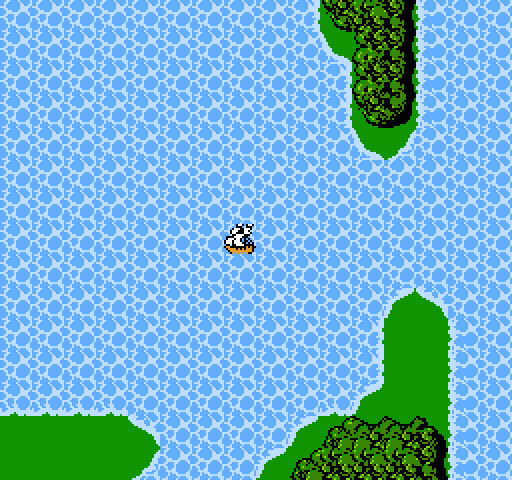
Raise your hand if you recognize this game by screenshot alone. Now, put your hand down unless you recognize that specific spot in that specific game. Everyone with their hand still up is missing a few hours of their lives that SquareEnix will never give them back.

You see, that bit of grass in the bottom right is what has become known as the "Peninsula of Power." It's a little bit of land that, due to a mistake on the part of the developers, generates random encounters that are intended to exist on the continent north of that thin strip of water separating the two.

The result of this ephemeral land-bridge incident is that players would spend hours walking around those few cells of grass in order to fight high level monsters and increase their levels more rapidly than normal. The sadness here is two-fold. Firstly, that such a practice is neccessarry to reasonably complete the game. Secondly, that the game expects you to do this without such a short-cut.

You see, back in the day grinding wasn't the groan-inducing buzz word it is today. It was the status quo. Today it's something to be reduced when possible. Back in the day it was expected to be in every RPG you played. The game went from levels A-Z, with major fights at each vowel, and it was up to you to ensure you were at the correct level when those came up. The designers knew how powerful they wanted the early and end game enemies to be, without much thought to the player's trip up the lv ladder. Pacing hadn't really occurred to anyone.

Lv57 Commenter

The above is a picture of a Troll from World of Warcraft - one of about 3 model varieties (regular, savage, and big brute guys). Now, I first fought an enemy with that model in, say, the high lv 20 range. That one's lv57. However, it's okay, because the player is lv67 and can easily whoop this one. However, I'm sure there's a lv67 Troll out there as well, though he'll be of a slightly different coloration.

The Law of Chromatic Superiority is an old trick used in video games to recycle a limited supply of enemies. At lv1 you fight a blue slime, at 10 a red one. The thing is, you're doing the same all the way up the ladder. Sure, the lv40 wolves are larger and black, and your sword glows now, but you're still doing the same thing you did for your tutorial quest. At some point, it's just the same process over and over - with something more EXTREME added with each iteration.

The levels are not actually representing progress at all. Just cycles.

Worse, is that, in the MMO market, every level until the cap is often a simple time-sink, as most new content is produced solely for those at the "end-game." They need to keep people paying, and thus need to produce content for those who've expended that in the original box. Except, most haven't, they've just rushed to the end because that's where the content is. So, for player and developer alike - that's a good bit of effort wasted and less fun and profit than should have been made all around.

In MMOs, my pet peeve with levels is that they are absolutely counter-intuitive to the whole Massively Multiplayer bit. Anyone who's tried to take a party of real life freinds into an MMORPG, and play through the game with them will know my pain. It doesn't work. Someone will feel like the others are holding them back, or like everyone is outpacing them. People will reserve a character for playing with the group, but then grow resentful as they feel like they're being forced to play what has quickly become their "alt" character. A lv30 player can not have fun with a lv4 player, period. It wastes everyone's time. In a genre built entirely around social interaction, in which the player base is its entire defining feature, the only thing more egregious than this design mistake is its prevalence. Cudos to EVE Online, Guild Wars, and, to a lesser extent, City of Heroes for at-least reducing this issue.

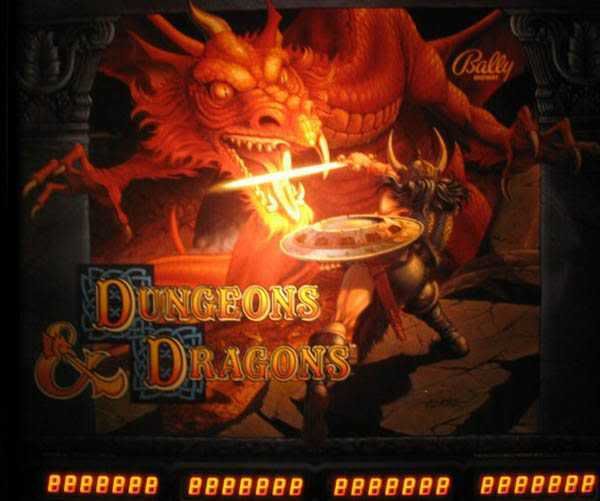
A D&D pinball machine that doesn't list your score in "Experience Points" has poorly utilized its source material.

And finally we have Dungeons & Dragons, which we must always return to whenever we discuss RPGs because, frankly, it's always to blame. It codified the trope. Those games were directly influenced by this game and, unfortunately in some cases (see: the later retconned Vancian magic system of FF1), its rules. Levels are always part of the package.

Even D&D's designers have, to some degree, noted some problems with levels. You see, fans have always identified a "sweet spot" for D&D. There's a certain level range where you've been given enough options to build a unique character, things are challenging but not imminently fatal, and you're facing off against some of the game's more iconic and fun enemies. Life, as an adventurer, is good. The low levels were a meat grinder, but you survived and its made you appreciate your status. Higher up, however, and things start getting silly. Nothing can face you any more. You've collected so many various baubles and powerful abilities than two are bound to interact in some unplanned way and, suddenly, you can transmute dragons to gold pieces as a free action twice per round. God grow angry with you, then go sulk in a corner lest they incur your wrath. You are literally creating life and new planes of reality in some rule sets. Meanwhile, you're DM is crying himself to sleep at night as he wrestles with how to make the game fun again without being a total dick.

So, with 4th edition, the designers explicitly stated that they'd made a conscious effort to take what they felt was the sweet spot and spread it over a wider level range. However, they never actually said that the whole game was now in the sweet spot. The same old problems exist, only somewhat diminished.

The sad thing is, the designers have designed themselves into a corner. Look at a D&D bestiary, and you'll find several monsters with "Dire" versions, Dragons with over 5 developmental stages, and, in 4th edition especially, creatures that plainly just have different versions at different levels for no reason other than allowing them to be used more often. The published adventures must be labeled for their appropriate levels, thus reducing their wide-appeal and the resources the adventure writers have to work with.

In all 3 cases, the level system isn't really working for players or designers.

In closing, I'll briefly explain my preference: Don't level up, level out. The issue in all the above cases is that it is assumed that once a milestone is reached a character must become more powerful in every meaningful way. The result is a rapid upward power creep that is rarely manageable. Instead of making characters more powerful, however, why not allow them to become more versatile?

When have you ever read a story where the hero overcomes their obstacles by simply becoming physically stronger? It's never the exercise or powers the hero has gotten that defeat the monster, but the things they've learned through their experience that allow him to solve their predicament.

We'll touch more on this alternative later.

Monday, May 30, 2011

Titles

You know what's a bad idea? Like, a really bad one? Subtitling a sequel "Betrayal." Especially when that sequel is on a different console, format, has wildly differing gameplay and art design, and was clearly inspired by an entirely different series. It's just asking for trouble from the fan base.
 
Now, that being said, I'm picking on it but Bloodraye: Betrayal does look neat. Sure, it's an obvious Castlevania clone but, hey, if Konami isn't going to give me a half-way decent side-scrolling Castlevania game on home consoles, somebody might as well take my money.

Oh, speaking of Konami and shitty titles. Harmony of Despair? R-really? You just had to have it be Castlevania: HD? I mean, that's a good idea and all, but you already made that game. Plus, that game is actually good. So, from now on, whenever someone mentions "Castlevania:HD," people will have to ask if they mean "the good one on the GBA" or the "shitty XBLA grind-fest with all the recycled graphics." More importantly though, it doesn't make any sense. "Harmony of Dissonance" works. You see, starting the title with "Harmony" allows you to maintain your musical theme. "Harmony" and "Dissonance" are antonyms, so you've made a clever little play on words there. "Harmony of Despair," on the other hand, has no such word play. It means only that you and your friends are co-operating "harmoniously" in your "despair" as you suffer through a betrayal of a brand you all love. But, hey, at-least your cries of pain will be in tune.
You see, the conflicting art styles help the player identify their character on screen.
Titles are important. They are the first thing a player knows about your game and the first thing they'll tell their friends about it.

My only rule with titles is that something's title is simply what people call it, and you have no control over this. Buffy is, for example, just Buffy, having grown out of Buffy The Vampire Slayer long ago. Jedi Outcast is just that, and sure as hell isn't Star Wars: Dark Forces: Jedi Knight II: Jedi Outcast. Hell, WoW is pretty much just WoW now. I see artsy titles that tell me nothing quite regularly, mostly on fiction, and they just don't work for me. As soon as you notice the people on your team or your audience referring to the product as anything other than what you printed on the cover, the title has changed. It's best to just go ahead and go with the more natural title than to hope against hope that people will stick with the one you just like so much.

Wednesday, August 25, 2010

Featured Feature: Player Investment (Part 2)

Part 2: The Top Tier Problem

So, we've talked about what exactly "player investment rewards" are. Now, we're going to get into some of the current problems with prominent implementations of the feature. In this case, we're going to focus on rewards that aren't merely commendations, but rather tangible benefits within the game - ie: equipment and abilities.

In short, rewards designed to be the absolute best in their class pit players’ desire for uniqueness against their desire to accomplish and have their accomplishments recognized. This discourages customization for some and achievement for others. A title’s degree of variety and individual expression online is directly proportional to the number of equally valued customization options provided to players.

Prominent examples of this problem include
Halo 3’s "hayabusa" & "recon" helmets, Modern Warfare’s weapon camouflage, and World of Warcraft's equipment.

Halo 3, for example, features 11 online armor variants available to most players. These variants are designed to provide players with a sense of individuality as they mix and match them, color them, and otherwise use them to form a unique persona online. Theoretically, this emphasis on individuality and the wide variety of tastes amongst the player base should result in a fairly even distribution of armor variants throughout the community.

This is, however, not the case. The “recon” and “hayabusa” variants, especially their helmets, seem to be far more common amongst those players who have unlocked them. The same is true of the other armor variants to degrees in direct proportion to the amount of work necessary to unlock them.This presents a problem, as the variety and individuality intended by the developer has been overshadowed by a second well intentioned feature, player investment rewards.


If you can look like this, you won't not.

The same problem can be seen in many other titles, most notably those which make heavy use of such player investment rewards. World of Warcraft, for example, features thousands of weapons, but only a very small fraction of those are actually desired by its most committed players. When new and better items are introduced, they do not increase variety but rather replace others as the now most desirable "top tier" options. Players invest a great deal of time in order to receive these rewards, only to be forced to sacrifice their avatar’s individuality for the ability to display them.


High level mages, or roving Warriors style street gang?

This problem is compounded by the fact that when a large portion of players display the same rewards, desiring recognition for their achievements, they, in fact, become less recognizable amongst the crowd of similarly outfitted characters. Thus, some may choose to forgo such challenges all together, knowing that they will not wish to display their rewards. Allowing the majority of the developer’s efforts to fall into such disuse seems not only to be contrary to the original design intent, but to also be poor financial investment.


These choices soon to be rendered moot by 200lbs of phat purple loot.

Solutions

The simplest solution to this problem might seem to be the elimination of “top tier” rewards all together. This, however, inherently depreciates their value as player investment rewards.

A better solution, it seems, is to eliminate the singular nature of the highest tier options. The Halo 3 armor variants, for example, might have been unlocked via multiple separate but equal progressions. Some armor variants might be unlocked by campaign player progress and achievements, while others would be unlocked by multi-player progress and achievements. This would result in two top tier armor variants, doubling variety while both equally rewarding player investment and providing more opportunities for such investment. A form of this strategy can be seen in World of Warcraft, in which players may gain the game’s highest tier armors either from raids or arena combat. These two alternative paths provide equal statistical reward to players who choose either rout, yet also present aesthetic differences from one another. Thus, players are able to feel as if they are displaying their prowess, while not necessarily becoming identical. Further, the more specific nature of these rewards more accurately portrays the nature of the player’s excellence.

Another option, and one which can be combined with other solutions, is to provide variety within a single reward. Halo 3’s armor system does, for example, allow players to mix and match amongst their armor variants and choose a unique color scheme. Thus, two individuals may have very different character models, despite sharing the same helmet. The problem this raises, however, is that the head, and face more specifically, is a physical feature very closely linked to identity. There is a biological tendency to notice a person’s face before examining them as a whole which extends to online avatars. Even if two character models are different in every other way, similar faces, or helmets in the case of Halo 3, can reduce the sense of variety. Variety could be added to individual helmets, however, by allowing players to further customize the helmet. This could include multiple visor colors, textures, the ability to choose glossy or matte finishes, smaller accessories such as antennae or eye pieces, what have you. In Modern Warfare, players could be rewarded not with “Red Tiger” and “Blue Tiger” camouflage, but with “Tiger” camouflage which they could set the tint of as they wish. Simply put, granularity increases variety.

If you enjoyed this post, please subscribe!

Tuesday, August 24, 2010

Featured Feature: Player Investment (Part 1)

Part 1: The what and why of Player Investment Rewards

As the blog goes on, I’ll be establishing various ongoing features. Individual game analysis, developer profiles, etc. in some regular format. We’ll begin with a “Featured Feature,” in each entry of which I will analyze a particular game mechanic, its history, place in the industry, how it works, why it works, what’s wrong with it, how it can be better utilized, etc.
Over the next few days, we’ll be focusing in Player Investment.


Lately players may have noticed a trend towards greater degrees of character customization in their online games. Halo, Call of Duty, Battlefield, they’re all doing it. In the past it was the standard that all players began games as complete equals, with an even and thus fair footing. Now the emphasis has been placed, instead, on individuality and deep character customization. So deep has this gotten in some games that is borders on being considered an RPG element.
What players might not have discerned, however, is the cause of this trend. While it is easy enough to simply wright it off as stolen ideas, arguing that developers are simply trying to duplicate the success generated by either Halo’s visual customization or Modern Warfare’s tactical customization, this is an oversimplification. In truth, such features are a very wise business decision.

You see, these character customization options almost always have another common feature. Rarely are all of these options available to every player immediately. They are generally unclockables, options requiring the completion of some predetermined qualification before access to them may be granted. This effectively makes these customization options merely a small part of the industry’s larger trend towards rewarding player investment.

Player investment reward systems provide players with benefits in direct proportion to the time and effort they spend with the game. The simplest form of these can be seen in the MMMORPG genre, in which players gain quantified levels of power as they put more time into the game. The term “experience points” was originally intended to reflect an abstract measurement of a character’s life experience and earned knowledge. In this market, however, it could as easily be seen as an absolute measurement of the amount of investment a player has put into a particular title. It is no mistake, then, that even more complex player investment reward systems, such as those seen in Halo 3 and Modern Warfare, still retain the term “levels” and “xp.” They firmly establish a system of progression in terms which gamers know.
This sense of progress lies at the heart of any player investment system. Rewards be they new character model options, abilities, or even simple numerical values are not handed out in bulk. They are evenly distributed over a long trail, always giving the player one more reward to work for. This creates a “carrot on a stick” scenario, compelling the player to continue playing. Progress requires commitment.

Such strategies simply make good business sense. The MMO genre, again, provides the simplest form of this. Due to subscription fees, the longer a player plays, the more money the developer will earn from them. In non-subscription based genres, however, developers still reap great benefits from invested players.

Online games, for example, are particularly dependent player investment. on the existence of an online community to function. Many games with some simple, tacked on multiplayer component soon have this feature rendered essentially non-existent by the fact that there are simply not enough players available to reliably establish game lobbies. By encouraging player investment, however, a developer encourages players to return time and again to the same matchmaking system, populating their multiplayer lobbies.

Beyond simply providing functionality, however, a well executed player investment system has been shown to increase the overall sustained population of online communities. This is desirable as more people playing more regularly is good for the bottom line. It provides a title with a good reputation and a greater likelihood that any given consumer will purchase the title. “Surely thousands of gamers can’t be wrong,” thinks the consumer. Every time your game is ranked on the top X most played online games on console Y during time period Z, that’s free advertisement. Most importantly, every player committed to your title is another mouth to spread the word. If they play your game for a week, you get word of mouth for a week. If they play it for a year, they’ll sell everyone they know on it.

On the marketing side, player investment can help provide a title with market control. It can help you not only be successful, but WIN. It's not secret that Modern Warfare and World of Warcraft are huge right now, enormous market titans with incredible player bases. What you might hear less about, however, is that they've done so well they've hurt other company's bottom lines. Many people are playing these games with such devotion that they simply do not have much time for other games. It is, for more time than is conventional, enough game for them. While this doesn't particularly help a non-subscription based game, it's a tremendous benefit for a series. A large portion Modern Warfare 2's success can be attributed to the fact that there was a large audience of Modern Warfare 1 players who had never stopped regularly playing the previous game, and the same will be true for Black Ops (though I'm skeptical of the series' continued dominance post-Infinity Ward debacle). The series did not leave its competitors any room to scoop up members of its player base, giving the sequel very little competition. It's not the nicest marketing strategy, but it moves units - short term and long.

Player investment works on even the most basic level. These systems actually make games seem more valuable to players. Biologically, human beings are predisposed to an "escalation of commitment," meaning that the more resources you spend on something, the more valuable you think it is. If you've spent several years in your house, for example, thousands of dollars on bills and upkeep and it catches on fire - you will likely be stuck in a conundrum. Even though it may be cheaper to move, buy a new house in a different location with the same features as your old house, your brain may compel you to spend more money on repairing your old house anyway. The $59.99 initial price tag, the hours of invested time, and any associated fees or accessories all build up to make the player value their investment more and more each day.

Don't be confused or frightened though. While all of these issues are from a developers perspective, they are by no means bad for players. The escalation of commitment, for example, contributes to a player's enjoyment of the game. The more they play, the more they like what they're playing. Player investment rewards can really drive a gameplay experience, keeping a game fresh long after it's no longer new.

That being said, however, no current implemented player investment strategies are perfect. Over the next few days I'll be going over some key problems with the most prominent such strategies, and ways in which they could be improved for the benefit of both developers and gamers.
If you enjoyed this post, please subscribe!