Friday, February 25, 2011

FortressCraft is Bad For Gaming (?)

(edit: Full disclosure - the ? in the title is new. In discussion, I've learned a bit more about this than original research had turned up. Check both the comments and the next article for discussion on that. In summary though: I retract my assessment that FortresCraft can objectively be called a "clone" of Minecraft and the idea that FortressCraft will significantly damage Minecraft's bottom line. The bit about it scaring other developers away from that business model though - that's still sound.)

You all know Minecraft right? Indie game? Big hit internet sensation? The current darling of artsy game connoisseur types - a title previously held by the likes of Limbo (meh), Braid, and Portal?
Alright, NOW we're getting pretentious.
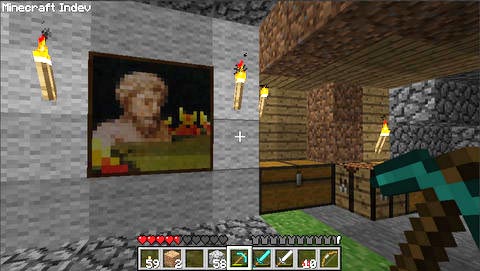
Well, have you ever heard of FortressCraft? No? Well, it's the thing that looks to dig a hole in the roof of your mine and use it as a cistern.
This is your indie game on FortressCraft.
You see, FortressCraft is Minecraft. The difference? Graphics, some as-of-yet unspecified extra features which do not yet exist, and, the big one, an XBox Live release.

This is bad for the gaming industry, developer and consumer alike.

Why? Well, Minecraft has been successful largely due to its unique business plan. It allow users to pay for a work in progress, on faith, in order to fund the completion of the project. It provides investors for a product which would otherwise never be made, and players don't have to wait for a finished product to enjoy its parts. It is, in theory, great. In a world where this were common practice, we all would have been playing Duke Nukem Forever for years, rather than anticipating it, "abandonware" would just be "unfinishedware," and more such software would actually have the funds to never go on hiatus in the first place.
Maybe the original, abandoned version of Daikatana WOULD have. (Check the link to actually find out!)
FortressCraft destroys this. You see, if the designer of Minecraft had not used this business plan, none of us would have played Minecraft, beyond the original two week demo project which it has since far outgrown. Even that original project would never have received the attention it has. The developers would not have the funds to sustain the project. They could not simply hope, without funding, that, upon completion, they would recoup their losses and produce a profit. Minecraft simply would not exist.

By extension, of course neither would FortressCraft. Without this business model, he would have never seen it, never had time to capitalize on the situation, and apparently never developed a interesting game concept of his own. Yet, he'll be the one to profit from the Xbox market. That might not seem like a huge deal, but one must recall that the vast majority of gamers aren't "in the know" enough to know all of this. This is especially true for the console market. Almost every sale of FortressCraft will be an individual who will no longer need to buy MineCraft. In other words, that's pay the designer should have gotten for his work that he now never will. It might not seem like a big deal, but for an indie developer that's a financial hit that's incredibly hard to take.

By doing such a project as FortressCraft, its designer has all but doomed all future chances of success for such business models. Even if it's a bomb, or never releases, its effects will be felt. You just can't risk the chance of some guy swooping in and aping your work at the last minute, making great profit for little investment. It doesn't promote "competition" because it denies Minecraft's team any opportunity to compete. Competition has a positive economic effects, unjust enrichment does not.

So, let's move beyond the subjective. We can argue all day over whether or not FotressCraft is a "clone" or represents copyright infringement. That's an extremely complex legal matter I'm not qualified to comment on. Let's focus on what this objectively means for gamers and designers.

-Designers: It has gotten that much harder to fund independent projects, and thus that much harder to create original and experimental products.

-Gamers: There are games - games you would have loved - that will now never exist.

And all for what? A minor financial flash in the pan for one man, a one hit wonder unlikely to be followed up by future creative success once he's wrung the creative juices out of someone else's work.

In short, if you're anyone other than the creator of FortressCraft, FortressCraft has hurt you.

(edit: Some text redacted for being unnecessarily personal and entirely based on my own presumptions)
(edit 2: I'd also like to add that, while this article is about a particular case, this isn't a new practice. Oh how creativity is rewarded in the industry we so often decry as bereft of original ideas.)

Sunday, February 20, 2011

Popular Mechanics: The Catharsis Button

Like many avid male gamers with significant female counterparts, I want my fiance to be a gamer herself. I spend no small amount of effort, sometimes to her chagrin, on the task. While I realize that it may be dangerously close to "wanting to change" someone, I don't feel it's the same. I enjoy getting into her interests and, like those, I see it as something we can do together. Some of my best bonding moments with friends have been over video games. Furthermore, I just don't get how someone could NOT be into video games. It's like someone saying they don't like music. I can believe that they don't like what they've heard and know of, but that there is no music in the world for them seems absolutely impossible and incredibly sad.
Ladies, just think of it as a picnic with space marines.
In my attempts at winning her over, I have had many setbacks, but also a few wonderful, if small, victories. I can count the number of games she really enjoys and will pick up at her own volition on one hand, but she also eats those things up. Amongst the titles that she's grown enamored with is A Boy and His Blob. She expressed interest when I bought a copy for my little sister, so I had to immediately go out and pick up a copy for our own home.


So, all of this has beating around the bush finally leads to the actual topic of this post, a feature of A Boy and His Blob I like to refer to as the "catharsis button."

Pressing up on the Wiimote's D-Pad causes "the boy" to hug Blob. This serves no practical purpose. There is no secret way it kills the final boss, no gameplay trick, they just share a hug - accompanied by an impossibly cute little noise she says should be spelled "nnnnnnnnnnnnnn."
"And the Grinch's heart grew three times that day."
So, why, as a designer, do I think that's in there? Well, the entire game is built around the relationship between "the boy" and Blob - so of course there's that aspect. In that sense it's a far more effective version of Lionhead's attempt at integrating touch as a mechanic in Fable 3. On occasion, I've noticed her hugging Blob expressly because of how many times she's had to manipulate him over the course of a level, or due to some frightening fall. He's her partner, and she feels the need to show her appreciation for him. It's beautiful really. That is, however, a purely affective use. Though that holds equal weight, I do believe the action serves an objective function. Catharsis.

As my fiance plays through the game, she will occasionally come upon situations that result in repeated failures. After such incidents she will, inevitably and without prompting, hug Blob. Watching over her shoulder, it's obvious what effect this has on her. She's releasing the pent up frustration she's developed with the game. In many places where, in other games, she would have gotten annoyed and walked away from the title forever, she has simply hugged Blob a couple of times, relaxed and pressed on anew.

This is, of course, a familiar course of action to many gamers. Many a time have I either intentionally thrown a protagonist into certain death for this purpose. When life gets me down, few things pick me up better than a good old fashioned GTA murder spree. In no other game, however, have I ever seen this effect either so serenely or concisely captured.
I have such fond, sociopathic memories of this parking garage.

This, combined with the games very calm soundtrack, leads the platforming puzzler to be one of the least frustrating experiences I've played, despite the fact that it presents no lack of challenge.

Friday, February 18, 2011

Featured Feature: Player Investment in Casual Games (Part 3)


Part 3: Escalating Player Investment

As we've been discussing, a major difference between the "casual game" and the $60 AAA title is the players lack of investment in the media upon initial exposure. We, or I have if you've decided I'm a moran, have decided that.

The first goal is to to get the player to invest just a first few moments of their time on the title. After the player's brain recognizes that they've spent some of their precious time with a game, the game begins to benefit from that aforementioned investment bias. They've allotted the time, so they might as well pay attention and see weather or not this thing is any good. Your goal in this period is very simple - don't cause the player to turn your game off. Hell, avoiding higher brain functions at all may be advisable


This is basically the old "first impressions" routine. The player absolutely will not go beyond the first minute to see if your title gets better as it goes. Final Fantasy XIII provides an enormously scaled model of failing at this. So, in the first moments you must avoid raising the following red flags: frustration, dullness, and unoriginality. The game must only be entertaining.

A common mistake is placing an overly restrictive tutorial, especially a lengthy one, at the very outset of the game. This is often raises all three of the red flags we just mentioned. Tutorials are an essential part of most games, but they're also an art-form in and of themselves. Most players are perfectly fine with tutorials, usually appreciative of them at first, but their patience wears thin quickly. They've started up a video game - and thus you know that your players want to play a video game. Bad tutorials fail because they are not "playing a video game." Good tutorials either do not get in the way of play, or they are, themselves, play. The majority of Portal is nothing but play, without a traditional tutorial in sight, because that's all been integrated.

Don't neglect to teach your player how to play either, or their constant failure will simply result in frustration. Again, red flag. This isn't to say that the first level of a game should be impossible to fail at, of course. This isn't the case for Super Mario Bros or Sonic the Hedgehog, and those games caught on alright. In the beginning though, your game should only present enough challenge to prevent it from becoming dull, another of our red flag issues.
I'm predicting exactly 0 people will need to click the "Super Mario Bros." link.
Once you've avoided those "red flag" issues, you can safely assume your player will provide the game with a reasonable amount of time to assess its quality.

Here things should be rather simple. Theoretically you believe you've built a good game worthy of publication, unless you work for Omega Force or EA Tiburon of course.
If those two got pregnant, they'd have quintuplets. Identical quintuplets.
There is, however, a pitfall there. Occasionally a game will try to give the player new content in such small portions, holding its best parts back for a big climax, that the player has quit before they ever experience them. Don't let this be you. The ending should be spectacular, of course, but the beginning should be just as fun. You have to let them know that good things are coming.
Theory: Halo 2's original ending was so awesome that Bungie worried it would dwarf the rest of the game and scrapped it.

The next thing I can advise is providing a clear sense of purpose. Ever wonder WHY so many gives are divided up by levels?Yes, there were originally considerable technical limits that reinforced modular game design, but why has this remained when so many other tropes from that era have faded? Why did Super Mario Bros, use not only levels, but "worlds?". Progress. By breaking up the game into definite checkpoints, you provide the player with a sense that, even in the short time they've been trying the game, they've made progress. They've attained something, and are thus further invested. A more modern example of this can be seen in current XBox Live Arcade demos which often end with a statement along the lines of "Congratulations on beating the demo! Buy now to maintain your progress and get the avatar award you unlocked!"


After beating 3 of the 5 levels of World 1 the thought process will become "well, I might as-well beat World 1." After that, "Well, I've beaten 1/3 of the game. Might as well pick it up for myself and finish it." And why? How does that last part make any sense? It's normally only "So I can say I did." IE: "So I can't say I wasted my time on the first 1/3." The player has become invested, and you just moved a unit.

In summary:
1 - Avoid "red flag" issues like frustration, dullness, or unoriginality. These may cause the player to end the game prematurely.
2- Show your player the quality of your game early. They have to know what they'll be getting to assess value.
3- Provide a sense of progress. Lead the way to the full product.

Thursday, February 17, 2011

Featured Feature: Player Investment in Casual Games (Part 2)

Part 2: Removing Barriers to Investment

A "barrier to investment" is what prevents the consumer from starting the "escalation of investment" program designed into your game, which we will discuss in the following post. In our original example of Andreas_S/Dantus's little web-game, this took the form of the game's control scheme. What seemed sufficient to him, and didn't bother me at all, was a barrier to entry for the little girl. She invested her time and god back frustration. The mental formula became [investment = frustration], which trumped the illogical tendency of [reward - investment = investment*time].

This is why most games you play fall into very similar control schemes. In third person view my hand automatically hits A to jump on my 360. On my PC, the spacebar. WASD make me move. When I play an older PC FPS, I immediately turn on mouselook and set up my strafe buttons. These conditioned comfort zones may seem as if they stifle creativity on occasion, but their existence is merely a byproduct of the need to reduce those initial barriers of entry. The majority of the industry has agreed on some basic guidelines in order to keep the consumer happy.

Continuing in the same title, the father actually making the post pointed out that the game's first "golden feather," an optional vanity item akin to Super Meat Boy's bandages or other such pickups, is way too hard to get. It isn't that it is objectively hard to get, one merely needs to carefully traverse an unstable pile of platforms, but it is relatively hard for it's location in the game and in comparison to the other "golden feathers" on that level. It is also thrust upon the player in such a way as to make it impossible to ignore. This can potentially break up the frustration free flow of those precious first moments, and thus should be addressed.
Example: After investing >100x lives on one $#$@$ bandage, I attach entirely nonexistent value to it.
Long story short, the first moments of a game should be fun - pure and simple. They should be literally anything that will keep the player glued to the screen. The challenge, and thus risk of frustration should only be ramped up once the player has actually decided that they enjoy your game and thus want to invest the time to play it, the effort to overcome these new challenges, and the money that will allow you to provide them with such an experience.

Other major "barriers to investment" are more practical concerns, such as platform compatibility, advertising, or product availability. In an ideal world, you would release and the customer would instantly and automatically have the demo to your game sitting on the desktop of whatever media consumption device they happen to be using at the time. On the consumer's side, this wouldn't even be a bad thing, if every single title released was absolute gold. Such is, however, not the case. These things are "barriers to investment," but there's little subjective editorializing to be done on them. Try to maximize compatibility, make the thing accessible to as many people as possible, and do everything within reason to let all of them know about it. Kinda objective and obvious - if frustrating to execute.

So, you've taken the extra care to remove such "barriers to entry," the player now has your game in their hands, and is enjoying their first few moments with it. Now what? Now you have to bait the hook. For that, stay tuned to the 3rd and final part of our series on Player Investment in the Casual Games Martket, "Part 3: Escalating Player Investment."

Wednesday, February 16, 2011

Featured Feature: Player Investment in Casual Games (Part 1)

 Part 1: Player Investment in the Short Term

So, earlier today while fooling around with Unity 3D, more on that later, and looking for a solution to one of my problems in my current project I stumbled upon someone else's support thread. The query is irrelevant, but regardless I tried to help by playing the demo of the game he'd been working on, Chuck the Adventure Duck. It's a fun little platformer with some unique elements, but that's not really what sparked the post. That was the initial responses to his advertisement of this demo build.

Therein another poster mentioned allowing his young daughter to try the game. She instinctively reached for the spacebar to jump and, failing this, quickly grew frustrated with the game's use of the "up arrow" for jumping.

Now, obviously the solution for such frustrations is to map redundant controls. There's really no reason not to map Jump to Up, W, and spacebar, as well as putting Left, Down, and Up on A,S, and D respectively. The thing that got me thinking, however, was how quickly such a simple and inconsequential thing turned her off of the game.

Earlier in the blog I'd made a few posts about "Player Investment Strategies" (1, 2, 3). These really focused either on the concept as a whole or its application to large AAA titles. I addressed the macro, but never really the micro.

While Player Investment is key to the long term retention of customers for more drawn out games, one may assume that it isn't an issue for "casual games." Games played on web browsers or mobile devices are, after all, not expected to be played in more than short bursts. It is, however, this temporal aspect of the player's experience which makes attention to "player investment" absolutely crucial. The player will only be exposed to the game for a few fleeting minutes and, without such care, it is entirely possible that those will be the only minutes in which they will ever experience the title.

Unlike more traditional PC or console games, most "casual" games do not require any initial investment. Most people's first exposure to Angry Birds or Words With Friends, for example, is likely not even on their own system, but over the shoulder of a friend.
I love that the iPad has basically revived "hot-seat" play. I'd like to think these kids are playing Heroes of Might and Magic III.
You may recall our previous discussions in which I mentioned that the human mind, in its fantastic imperfection, has a tendency to overvalue things in which it has invested. The very fact, then, that a AAA title has already cost the consumer ~$60 makes them more likely to feel that it is a good game. The alternative, after all, is to admit that they have made a foolish decision. Ever gone on a shopping spree and picked up a sackful of games on the cheap? Your experience with any one of those is never quite like it is when your only able to bring home only one title, is it?
There are very few games I wouldn't pay $5.00 for. Many of them are on the Wii.
It is this lack of bias the casual game creator must overcome. Their title is new. The likely lack of promotional fanfare has left the consumer devoid of preconceived notions. They have no initial investment, and thus lose nothing if they drop the title after seconds. This is exactly why those first few seconds are so important.

So how, then, do you consciously design your title to build such investment? It comes in two steps: removing the initial "barrier to investment" and providing "rapid escalation of investment."

That being said, I want to discuss two specific aspects of game design and I can already tell that this post is getting too long. So, we're going to break this up into another 3 parter. Stay tuned for "Part 2: Removing Barriers to Player Investment," and "Part 3: Escalating Player Investment" over the next couple of days.

Monday, January 24, 2011

Sequelitis: Fable 3

So, a while back I made a post about Fable 2, discussing how I believed the sequel has developed the original games ideas and how I think the series should move forward. Well, Fable 3 is actually out now, so let's look at what's occurred.

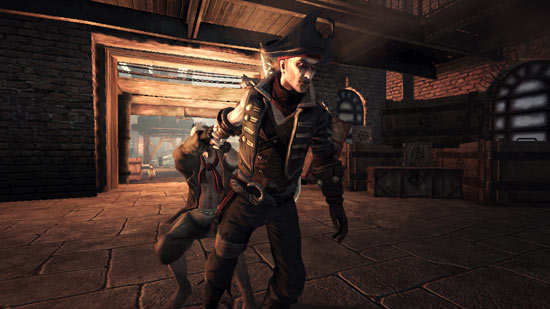
Image used for no reason other than that my hero looks exactly like that guy. With a sweet witch-hunter hat, of course.
Now, while this won't be a review, I should start by providing a general assessment of the game's quality, if only to contextualize the arguments herein. I enjoyed the game. I didn't feel it was overly short as, taking my time to take advantage of all of the content the game had to offer, it actually took me longer to be done with Fable 3 than Fable 2. The core storyline missions may possibly be shorter, but I got more hours of fun out of it than its predecessor. That being said, I still wrung it dry in less than a week, so I recommend it, but only as a rental or, as was my case, a borrow. I've heard a lot of people I normally agree with decry it as being absolutely horrible, but most arguments I've heard tend to be very nit-picky, focusing on a few things they hated. In a Peter Molyneux game, however, one must realize that he's going to throw a lot of stuff at the wall and, though not everything sticks, you're getting more experimentation in a title than you're gonna get in almost any other AAA title.

To start with the good, Fable 3 finally begins to do what Peter Molyneux has been promising it would from the very start. You actually do have a noticeable affect on your world that has started to move beyond the token and into something of actual consequence. Rather than the pair of binary choices presented in the previous game, there are many ways in which I may make my Albion different from yours. I may or may not have a chicken racing track, Albion lake, a brothel or an orphanage, a ruined or well kept city, an inspiring castle or black fortress, a thriving metropolis or deserted ghost kingdom, etc. In the end it just boils down to more multiple choice options, but the far higher number has begun to leave enough variables to have interesting results.

More importantly, these decisions are now tied into the actual game-play and narrative. Ones actions may now have unintended consequences. This, moving forward, should be an essential element in developing player influenced worlds. Without accidents, the world would be a much more banal place. I, for one, did not intend to become Albion's beloved and benevolent murderer king, but that's what happens when your gun accidentally goes off in a crowded market. So much the better.

Why can't I both renovate the orphanage AND build a brothel? I like babies and boobies. Is that so strange?
This being said, this mechanic still suffers from unnecessarily moralistic mechanics. There is absolutely no subjectivity to the game's decisions, to the point that you are always explicitly provided with both an objective moral assessment of the available choices and their certain results. You will never regret a mistake because, unlike the real world, everything is an absolutely known quantity.

The same issue leaks into the confusingly simplified NPC interactions, wherin you can simply tap Right Trigger to know every character's life story and you always know exactly how anyone will react to any given interaction.

In comparison, the most effective piece of game design in the oft panned Prey was a sequence early in the game involving a rather nasty machine, seen in the below video (not my own).


Basically, it's a conveyor belt of death ending in overkill via impaling. Impractical, but impressive. During this introductory sequence, the player gets off of the "conveyor belt" and is attempting to free the others, including his grandfather and lady-friend. During this process, the player does manage to stop the device. Then this happens (again, video not my own):


The player, passing through yet another alien hallway, spots a button facing the machine. Due to human curiosity and years of video game conditioning they, in all likelihood, press it. I know I did. The machine is reactivated and the player watches as his grandfather dies. You have jumped without looking, made a mortally serious mistake, and one which you have absolutely no hope of recovering from. Now, I could be wrong on some specifics here. Maybe the game does force you to press the button to continue. Maybe the game entirely ignores this wonderful moment of drama from there out. I wouldn't know. It is, however, irrelevant. All that matters is the impression that this perceived decision makes upon the player. The voice actor need not even say it. "What have I done‽"

Fable 3, to return to our subject, explicitly denies the players any chance of such revelatory moments, either for good or ill, and thus denies them a chance at emotional connection with the game.


The other issue here is that, much like the previous title, this approach limits replayability. As the player already knows what the alternative would have been, they have little motivation to spend another day of their life to see it actually play out. There is also no real variety, as the vast majority of players will, due to the game's binary morality system, choose either all of the good or evil options, meaning that of all the possible combinations, only 2 will really be seen online. This approach has limited the game's variety, when I lighter touch would have effectively multiplied the content on the disc without actually having to produce any more.


As I'd feared, Molyneux has also dabbled a little too much in novel concepts which haven't really come to much. Before release, for example, he made a huge deal out of the new hand holding mechanic, claiming that it delivered a great emotional connection to the NPCs. Not only does it not, but the mechanic doesn't even work. You constantly loose your grip on the NPCs, and a person being dragged off too jail, a buddy being led home after a long night of drinks, and a bashful first date all act exactly the same when the mechanic comes into play. The obvious goal was to capture a little of the drama of Ico, but it was a gimmicky waste of time here.
Bullshit
What "dragging" a criminal to prison actually looks like.
-Set to "Happy Together" by the Turtles
Overall, I'd say the game was an improvement over its predecessor but, in trying to streamline some mechanics, the dev team accidentally oversimplified some. Simplicity is a worthy goal, but not at the cost of depth. There is a balance there which, hopefully, the eventual sequel will be able to strike.


What I want to see in Fable 4:
- Moral ambiguity. Mass Effect's "Superman" vs "The Punisher" morality system not only makes more sense within the pre-set hero narrative, but is far more compelling.
- Better weigh simplicity vs depth. I found the NPC interactions and melee combat to be a bit watered down from the previous installment, but could not think of a single way in which these had improved the title.
- NPCs, beyond the supporting caste, that do not seem like mindless automatons. The constant encouragement to emotionally invest in, marry, and have children with these NPCs seems outright creepy to me at this point. In this area, the Fable series has achieved an uncanny valley, not of anatomy, but of persona. The Sims, for example, do at-least seem like simplistic caricatures of human personalities.
- Don't have the game constantly tell me to buy DLC. Hearing John Cleese shill for premium dye colors was down right pathetic.
- Don't charge for DLC, such as dye colors and varying dog breeds, which seem like fixes to glaring problems with the original release.
- Keep the interactive "menu" system. It's gotten a bit of guff due to its imperfections, but it's a solid step forward that should be embraced as a stroke of genius game design.
- Keep building on Albion as a growing place while showing us older parts we remember. Maybe even steal some Mass Effect 2 style cross-game influence. It really helps unify the series.

Games I Want to Make: Console Based "Tabletop" RPG (Part 2: Essence)

Of course, the idea as presented in the previous post does seem somewhat complex. As people in the comments have indicated, RPGs are possibly the most complex genre of game to develop, due to the demand for deep systems. If you're going to show the player your work, after all, you have to ensure that that work is thorough. Otherwise, they're just pulling back the curtain to see that Oz is an old lost guy.

So, let's take a step back. It occurs to me that it doesn't seem I've properly communicated the essence of the idea. I've also probably bogged myself down in unnecessarily clutter. Forgive me. Let's get back down to the essential and do away with confusing window dressing.

In short: This concept represents a Role Playing Game, literally. Not an "RPG" in the sense of the genre standard, of rolled dice and +X to STR. I have absolutely no desire to produce a D&D game because, for one, I don't think adapting those rules to a different context is a very effective or worthwhile goal. The benefit of a video game, over table top, is the ability to work in real time.

So, what would the game look like?

Well, from the player's perspective, an action game. Running around from a top down perspective, slashing enemies, exploring dungeons, would have much more in common with Zelda, Pixel, or Gauntlet than D&D. If the characters are choosing from "Wizard," "Warrior," etc. then there may not even be any necessity to customize your characters stats, especially not in any early prototype of such a game.

So, how the hell is that an RPG, or a "Virtual Tabletop?"

Because it is an avenue to Roleplaying. IE: A person taking on a character and interacting with the guy running the game and his fellow players on a complete subjective level.

And there, I believe, is where I have failed to communicate properly. This origin of this idea was in its simplicity. I can run a traditional roleplaying game without any accessories. No books, no dice, no character sheets, just a group of friends. They tell me who they are pretending to be, I describe a scenario, and they react. That is an RPG. Everything else is just a tool to aid in establishing that scenario.

And how would such a game do this? By not getting in the way. Such a game should be a toolset, much like Minecraft or Garry's mod in that it doesn't really represent a game in and of itself. All you need is character models, a toolset for the person running to game to create a rudimentary play-space and populate it, and a simple interaction system for the players that removes the burden of traditional RPG rules from the host.